time:2026-05-01
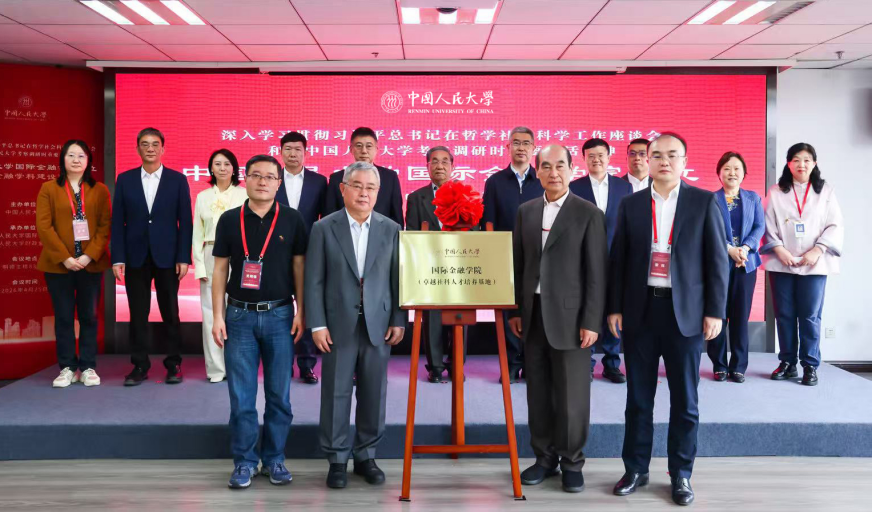
On the fourth anniversary of General Secretary Xi Jinping’s inspection visit to Renmin University of China, the Symposium on Theoretical Innovation and Accelerating the Construction of an Independent Knowledge System for Chinese Philosophy and Social Sciences was held at Renmin University of China.At the meeting, the School of International Finance of Renmin University of China — also serving as a Base for Training Outstanding Social Science Talent — was officially established.
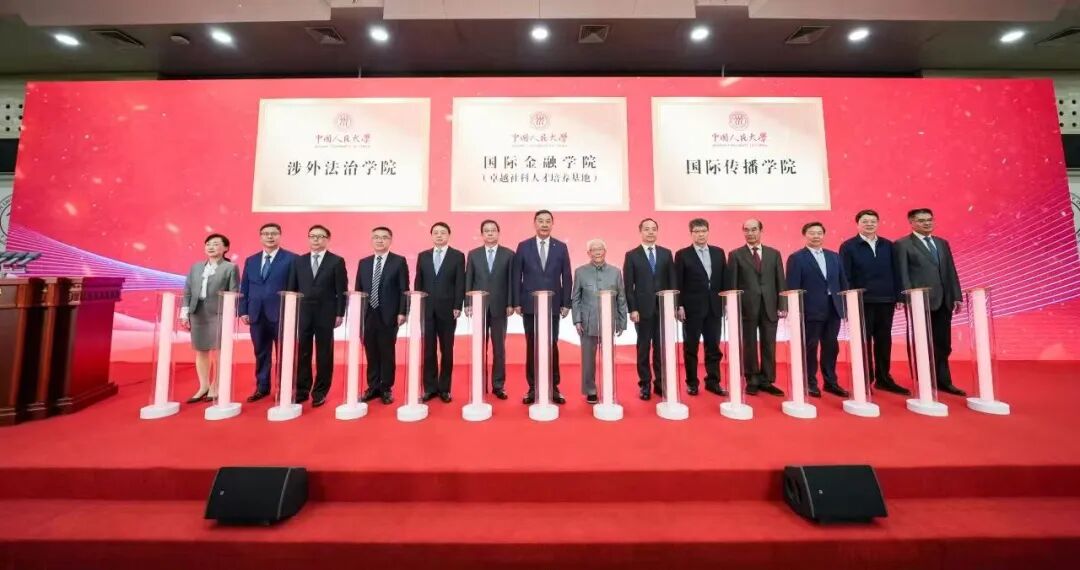
Zhang Donggang, Party Secretary of Renmin University of China; Ma Huaide, President of Renmin University of China; Fang Hanqi, Honorary First-Class Professor of Renmin University of China and a centenarian “great scholar”; Huang Yibing, Vice President of the Institute of Party History and Literature of the CPC Central Committee; Cui Shixin, Deputy Editor-in-Chief of People’s Daily; Zhao Rui, Vice President and Party Group Member of the Chinese Academy of Social Sciences; Wang Zhongmin, former Vice Chairman of the National Council for Social Security Fund; Zhou Shuchun, former President of China Daily; Xu Xianming, Deputy Director of the Expert Advisory Committee of the Supreme People’s Procuratorate; Feng Jun, former member of the Council of the Institute of Party History and Literature of the CPC Central Committee; Zuo Wei, former Party Secretary of Southeast University; Lin Shangli, former President of Renmin University of China; Wang Jiafei, Deputy Director of the Theory Bureau of the Publicity Department of the CPC Central Committee; and Zhao Chuandong, Deputy Director of the National Office for Philosophy and Social Sciences under the Publicity Department of the CPC Central Committee, jointly unveiled the plaque.That afternoon, the founding ceremony of the School of International Finance of Renmin University of China and the Symposium on International Finance Discipline Development were held. Zhi Xiaoqiang, Member of the Standing Committee of the Party Committee and Vice President of Renmin University of China, attended and delivered a speech. Li Yang, Chairman of the National Institution for Finance and Development and former Vice President of the Chinese Academy of Social Sciences; Wang Zhongmin, former Vice Chairman of the National Council for Social Security Fund; and Wu Xiaoqiu, former Vice President of Renmin University of China, President of the National Academy of Financial Research, and National First-Class Professor, delivered keynote speeches.
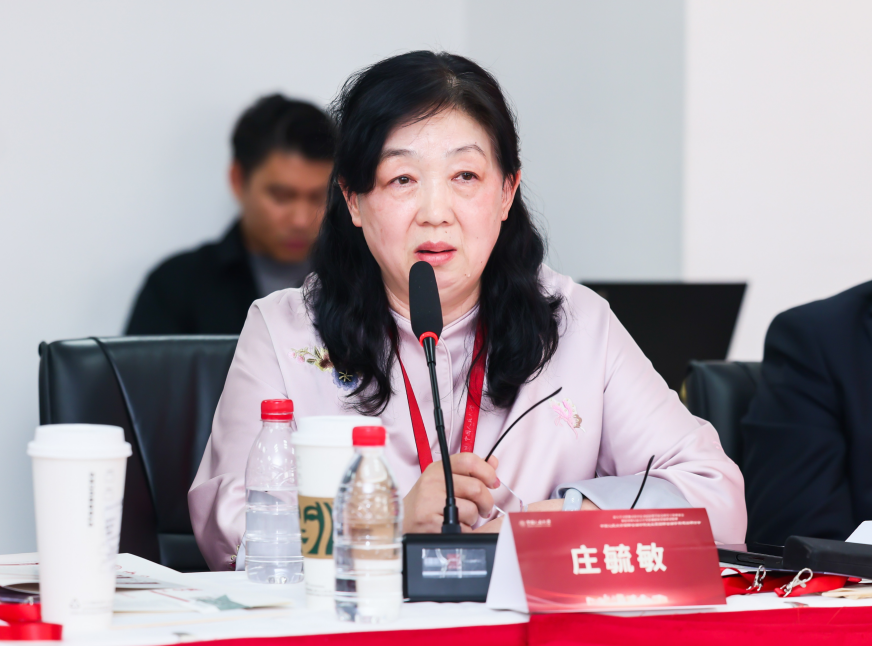
Experts, scholars, industry representatives, and alumni representatives, including Zhang Zhixiang, former Director-General of the International Department of the People’s Bank of China and former Executive Director of the International Monetary Fund; Mu Changchun, Director-General of the Digital Currency Institute of the People’s Bank of China; Yang He, President of the ICBC Institute of Modern Finance and Director of the Bank’s Office for Comprehensively Deepening Reform; Liang Zhang, Chairman for Greater China and CEO for China at Commerzbank; Huang Jinlao, Chairman of Suning Bank and President of the Jiangsu Digital Finance Association; Wang Yue, Chair and Professor of Finance at the University of Minnesota; E Zhihuan, Council Member of the Chinese Association of Hong Kong and Macao Studies and international finance expert; Jia Junxue, Dean of the School of Finance at Renmin University of China; Zhuang Yumin, Executive Dean of the National Academy of Financial Research at Renmin University of China and Member of the Financial and Economic Affairs Committee of the National People’s Congress; and Wang Fang, Vice Dean of the School of Finance at Renmin University of China, held discussions on topics such as the development of the School of International Finance, the growth of the international finance discipline, and the cultivation of international finance talent.The symposium was chaired by Song Ke, Dean of the School of International Finance of Renmin University of China. Representatives of the first cohort of students at the School of International Finance, faculty, students and alumni of the School of Finance, and representatives from co-building institutions also attended the symposium.
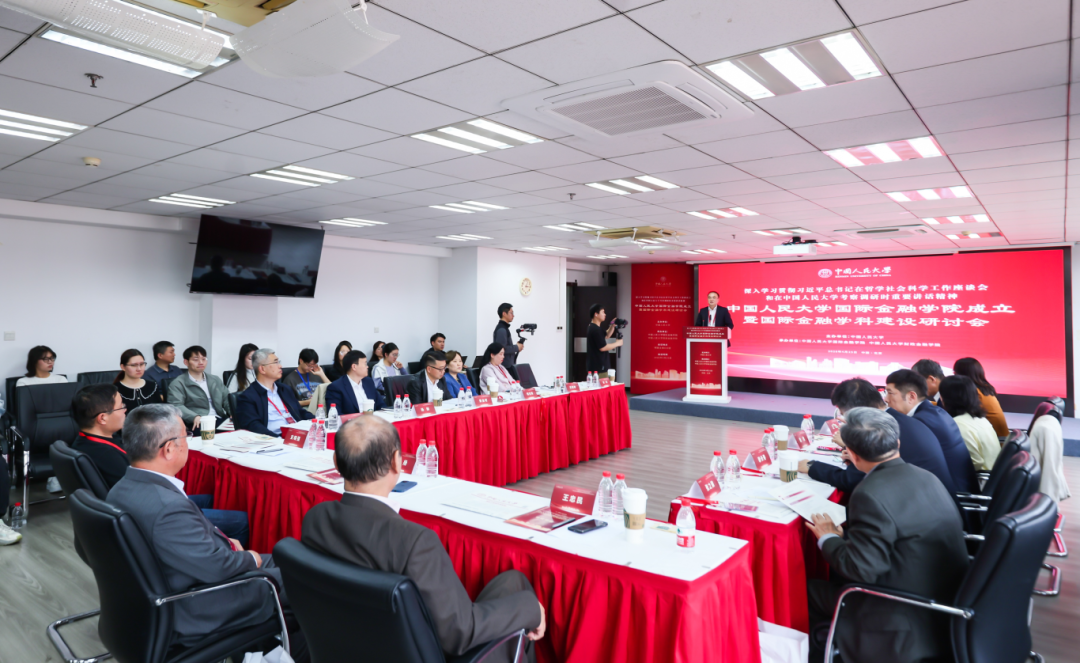
Zhi Xiaoqiang stated in his speech that this year marks the fourth anniversary of General Secretary Xi Jinping’s inspection visit to Renmin University of China, as well as the tenth anniversary of General Secretary Xi Jinping’s important speech at the Symposium on Philosophy and Social Sciences. The establishment of the School of International Finance is an important measure for the university to serve the strategy of building China into a financial powerhouse and to implement the national plan for building bases to train outstanding social science talent.
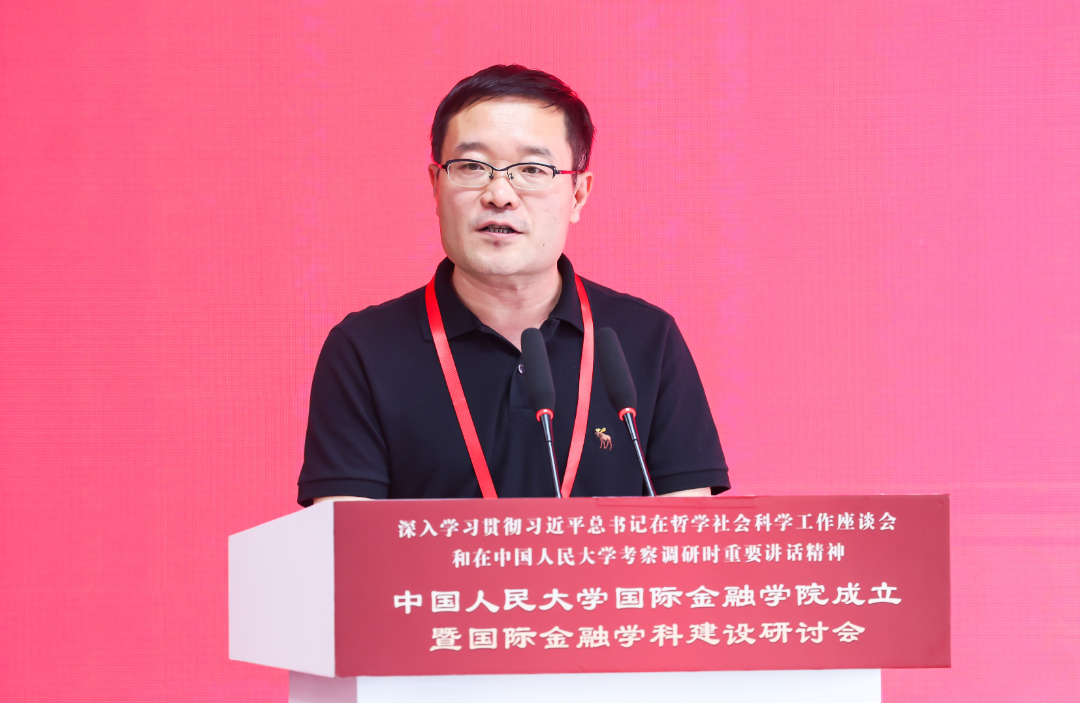
At present, the global economic and financial landscape is undergoing profound adjustment, and high-level financial opening-up continues to advance, placing higher demands on the cultivation of international finance talent and the development of the discipline. He expressed the hope that the school would rely on Renmin University’s strong foundation in the humanities and social sciences and its disciplinary strengths in public finance and finance, integrate resources both inside and outside the university, explore new pathways for cultivating top innovative talent, and build a globally influential center for international finance talent and innovation.
As one of the first pilot programs of the Ministry of Education’s National Base for Training Outstanding Social Science Talent, the School of International Finance aims to thoroughly implement General Secretary Xi Jinping’s important statements on financial work and the strategic deployment for accelerating the building of China into a financial powerhouse. Focusing on the frontiers of international finance and technology, the school will coordinate efforts in cultivating “interdisciplinary, practice-oriented, and internationalized” strategic talent, advancing theoretical and practical innovation in international finance, building a global cooperation network, and conducting international financial policy research. It is committed to becoming a globally influential hub for international finance talent and academic innovation.
Guided by the talent cultivation goal of developing students who “have ideals and commitment, understand China’s national conditions, know the world, and excel in practice,” the school aims to cultivate a group of outstanding innovative talents in international finance who can “move freely between Eastern and Western cultural platforms.” Centered on building an independent knowledge system for Chinese finance, it will produce a number of landmark achievements that lead theoretical and policy innovation in international finance. Anchored in the strategy of building China into a financial powerhouse, it will also launch practical innovation projects integrating government, industry, academia, research, and application, providing solid intellectual and talent support for promoting reform in global financial governance, leading the formulation of international financial rules, safeguarding national financial security, and advancing the path of financial development with Chinese characteristics.At present, the first cohort of 123 graduate students will enroll in the fall of 2026.
During the keynote speech session, Li Yang, Wang Zhongmin, and Wu Xiaoqiu shared their views respectively on the evolution of the international financial system, financial transformation in the AI era, and the construction of an independent knowledge system for the finance discipline.
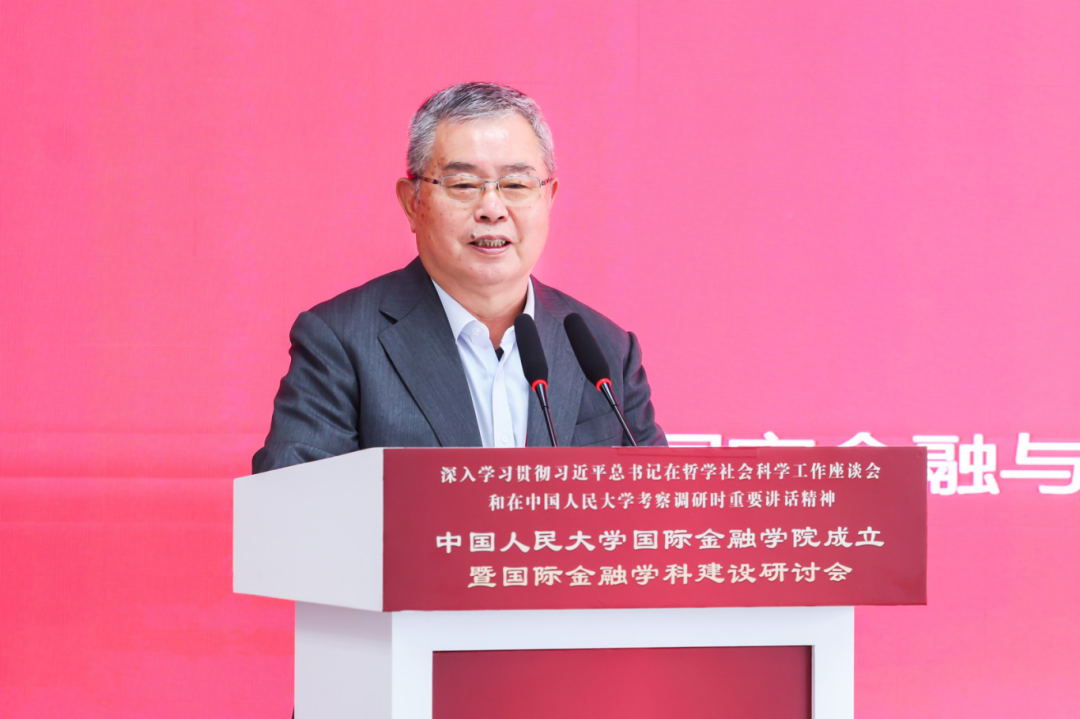
Li Yang stated that the mission of the School of International Finance is not only to develop and improve the finance discipline, but also to serve the building of China into a financial powerhouse and enhance China’s international financial influence. To effectively fulfill these arduous and honorable tasks, much work remains to be done. Among the priorities are fundamental issues such as financial infrastructure, coordination of legal systems, and new asset systems. Payment and clearing systems, international financial markets, accounting standards, and the rule-of-law environment are all important pillars for building a financial powerhouse.In the face of new developments such as crypto assets, China needs to study how to enter and shape the new international financial order. The School of International Finance should conduct in-depth research around new concepts, new standards, new rules, and new mechanisms, providing theoretical support for China’s participation in global financial governance and for building an international financial system in which China plays a more influential role.
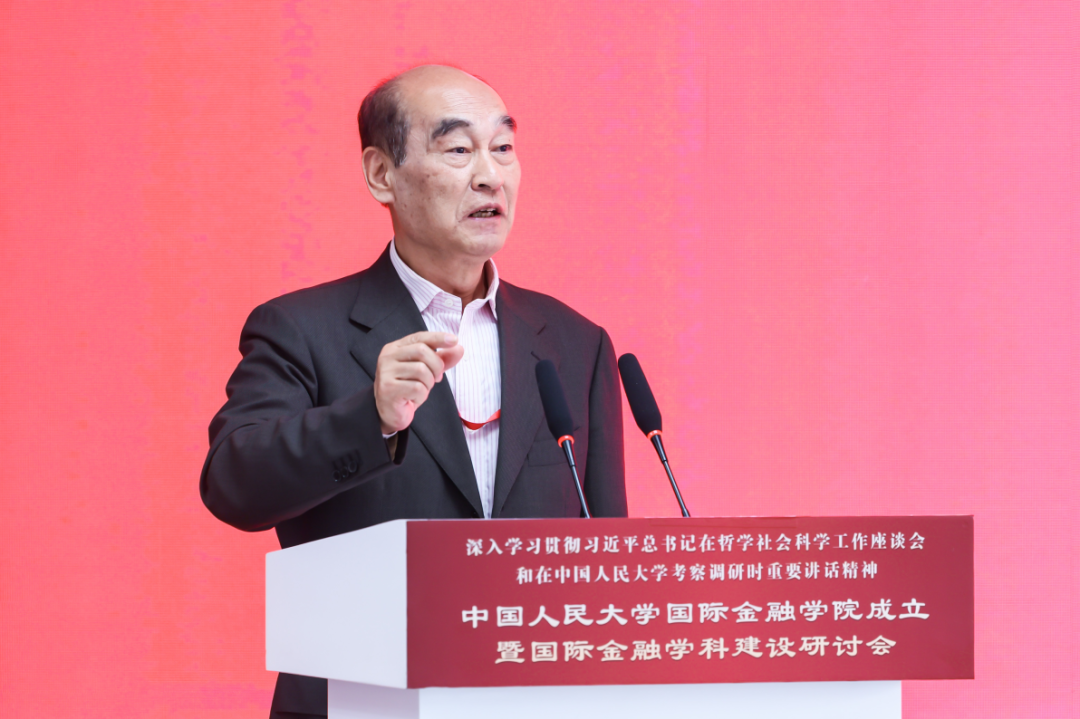
Wang Zhongmin stated that the AI era is reshaping the industrial foundation, asset logic, and risk governance methods of international finance. First, the foundation of credit money is shifting from the industrial system of the industrial era to a digitalized and intelligent industrial system, so financial research must grasp new modes of production and transaction structures. Second, technological progress has significantly compressed the life cycle of assets, requiring finance to shift from a heavy-asset logic to a capital-intensive logic and a full-life-cycle capital service logic. Equity capital, venture capital, securitization, and corporate governance mechanisms will all undergo profound changes. Third, financial risk management methods are also changing in the AI era, and regulation should become more real-time, data-driven, and forward-looking. The School of International Finance should focus on financial transformation in the AI era and study new logics of money, assets, and risk governance.
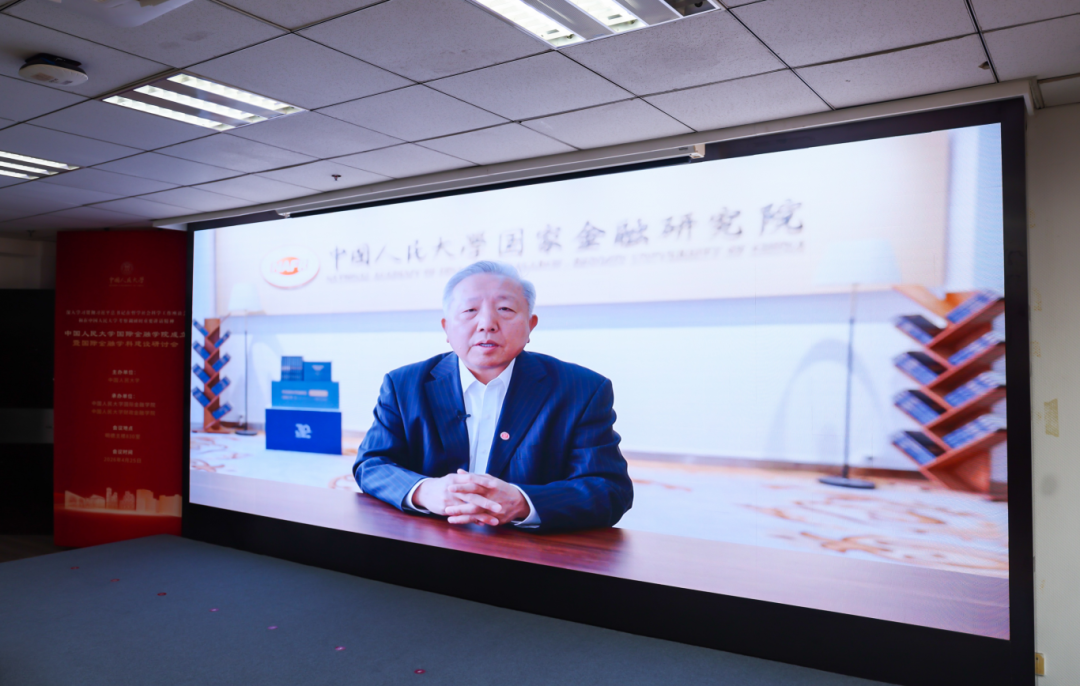
In his video speech, Wu Xiaoqiu stated that the establishment of the School of International Finance is an important step by the university to strengthen the finance discipline, serve the building of China into a financial powerhouse, and cultivate internationalized financial talent. The development of the international finance discipline should be grounded in China’s financial reform and development practices, deeply study major issues in financial modernization, financial opening-up, and financial internationalization, while also learning from important theories, methods, and experiences in the international finance field, thereby forming an independent knowledge system for Chinese finance through integration.The cultivation of international finance talent should emphasize understanding the operating rules of international finance, grasping global financial development trends, and focusing on issues such as RMB internationalization, capital market opening-up, and the development of international financial centers. The school should strengthen the development of a high-level faculty team, gather expert resources from both inside and outside the university, and jointly promote the high-quality development of the School of International Finance.
During the expert discussion session, participants exchanged views on the development of the School of International Finance, the growth of the international finance discipline, and the cultivation of international finance talent. They offered suggestions on disciplinary positioning, training systems, practical platform building, and resource coordination.
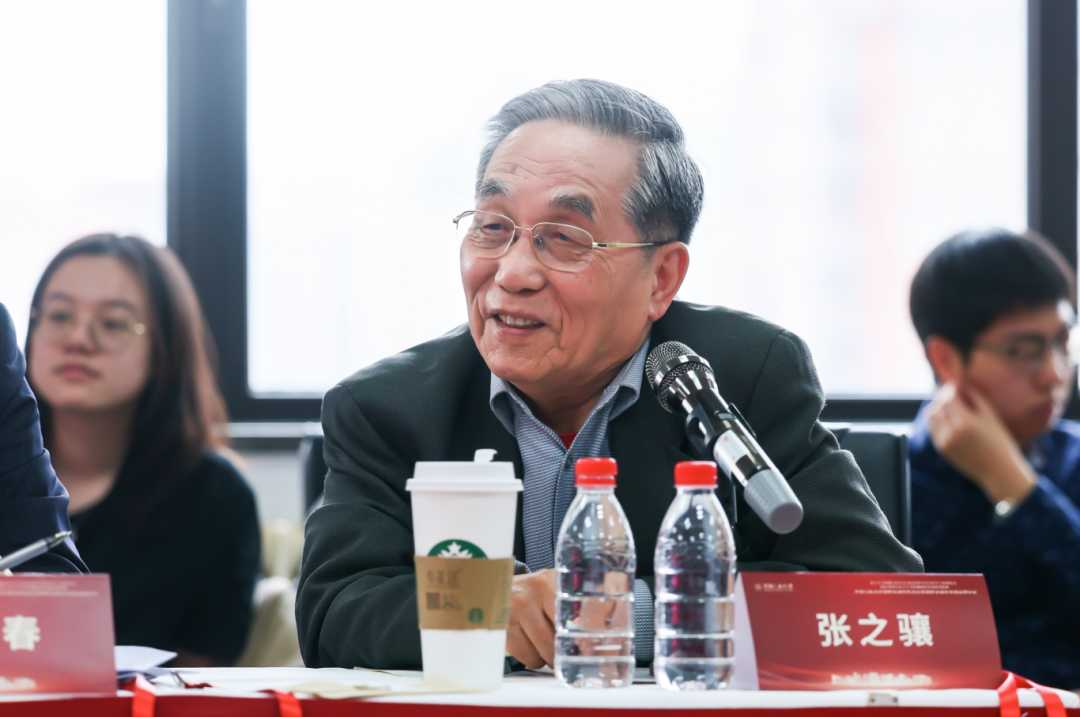
Zhang Zhixiang stated that the establishment of the School of International Finance carries important historical significance and shoulders the mission of serving China’s participation in global financial governance. The current international financial system remains deeply influenced by existing hegemonic logic. China needs to form more explanatory and leading conceptual innovations in the field of international finance. Rather than simply following existing theoretical frameworks, China should put forward Chinese solutions in the reform of the global financial system and strengthen its international discourse power.
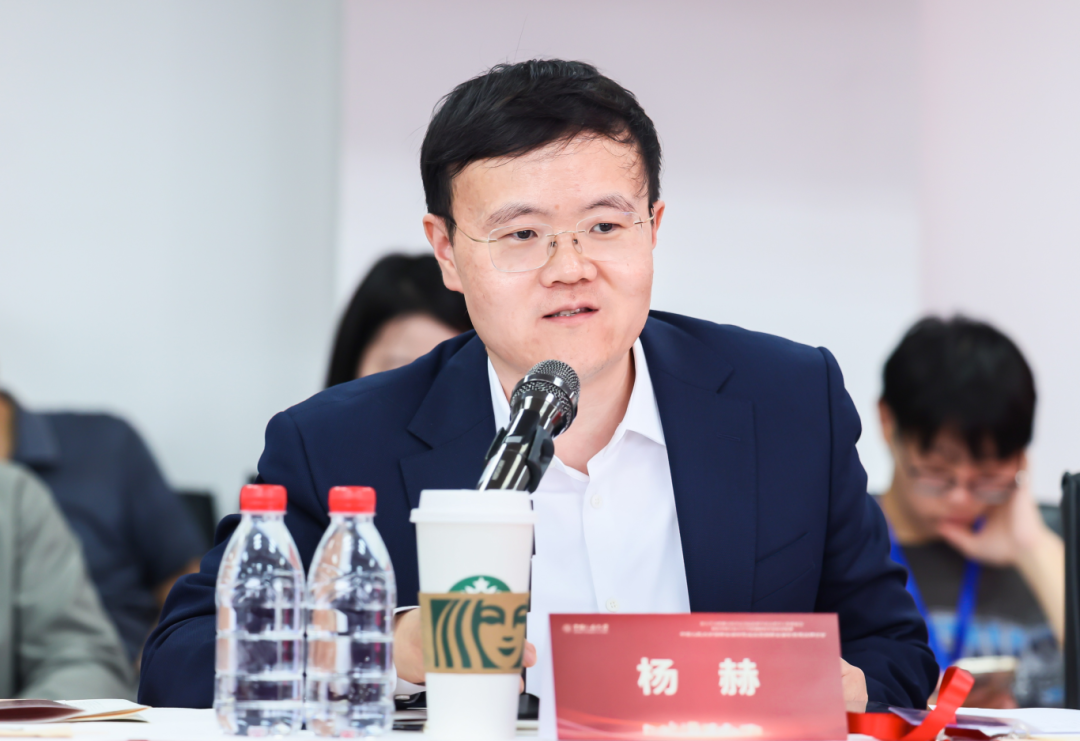
Yang He stated that the cultivation of international finance talent in the new era should go beyond simple “skill upgrading” and be systematically considered within the transformation of the global macro paradigm. First, it is necessary to coordinate security and development, cultivate risk insight under geopolitics, and improve global financial governance. Second, talent should be able to respond to judicial practices in different jurisdictions and build compliance resilience in the face of global regulatory divergence. Third, it is important to embrace technological change and promote the transition from “finance plus technology” to native digital-intelligence capabilities. Fourth, internal governance should be improved, and financial ethics and long-termism should be strengthened. Fifth, the laws of growth should be respected, and interdisciplinary talent should be forged through learning by doing and cross-sector practice.
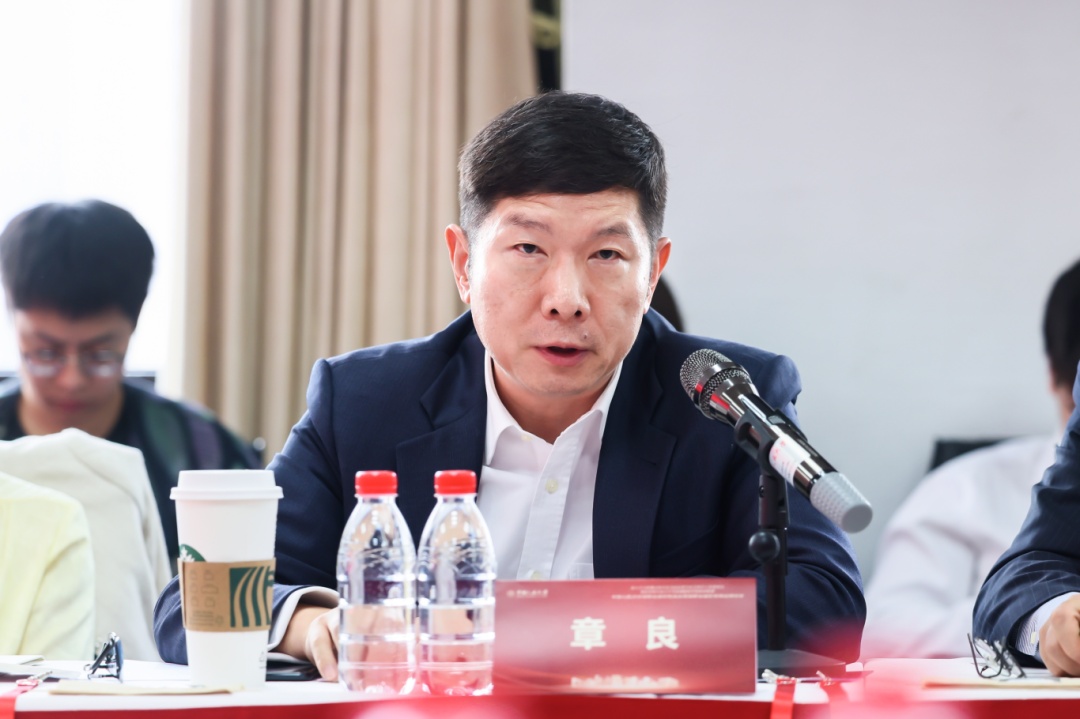
Liang Zhang stated that China’s financial market is facing a new task of high-quality alignment with international standards, making the establishment of the School of International Finance particularly timely. With the development of Shanghai as an international financial center and the large-scale overseas expansion of Chinese enterprises, there is an urgent need for a large number of international finance professionals in fields such as cross-border financing, mergers and acquisitions advisory, foreign exchange trading, cash management, and risk management. The school should strengthen practical training and help students enter the front lines of international finance.
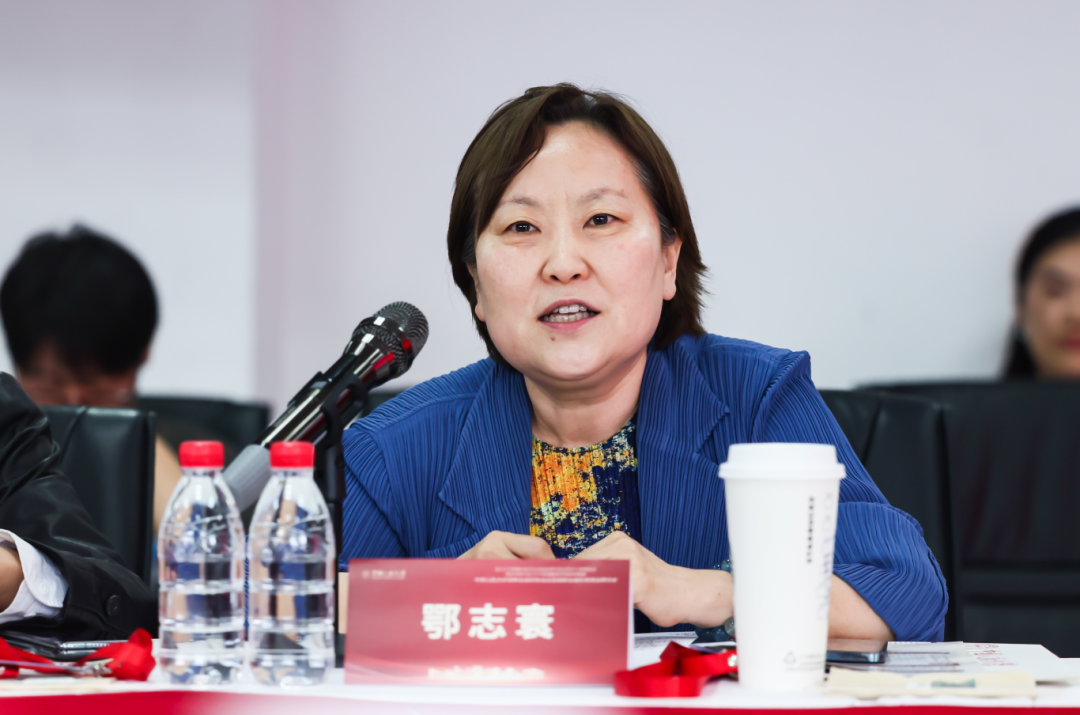
E Zhihuan stated that the establishment of the School of International Finance marks a new mission and new development for the international finance discipline in the new era. The school should focus on building China into a financial powerhouse and cultivate interdisciplinary, practice-oriented, and high-quality financial talent. She suggested strengthening four disciplinary systems: the international financial governance system, with RMB internationalization as a breakthrough point; the international financial operation system, centered on Chinese enterprises going global; the international financial cross-cultural system; and the international financial risk management system. These efforts should aim to cultivate high-level international finance talent who have ideals and commitment, understand China’s national conditions, know the world, and excel in practice.
Huang Jinlao stated that both the global and Chinese economic and financial systems are showing signs of structural differentiation, and the cultivation of international finance talent should be more closely oriented toward real market demand. The School of International Finance should focus on emerging market financial systems in regions such as the Belt and Road countries, Southeast Asia, Africa, and Latin America. It should strengthen research on financial systems, market structures, and business scenarios in different regions, enhance foundational training in digital technology and financial technology, and also reinforce emerging financial fields such as cross-border payments, cross-border trade finance, cross-border asset management, cross-border logistics finance, and cross-border e-commerce finance. The goal is to cultivate practice-oriented talent capable of serving enterprises’ overseas expansion and international market development.
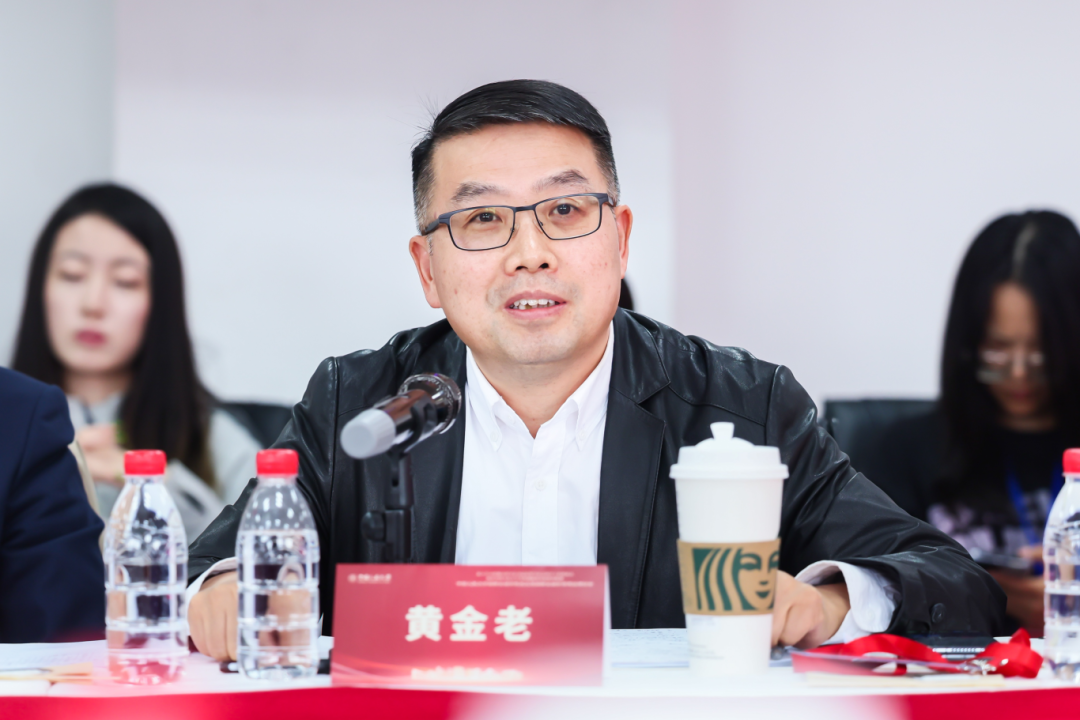
Wang Yue stated that the AI era poses structural challenges to financial talent cultivation. In the future, the truly important capabilities will not only be knowledge and skills, but also psychological resilience, creativity, and judgment in the face of uncertainty. The School of International Finance should promote open classrooms, allowing students to learn how to define problems, search for information, and integrate resources through real-world issues. In a campus environment with relatively low trial-and-error costs, students can enhance resilience and growth capacity, while the school explores new talent cultivation models suited to future changes.

The expert discussion was chaired by Wang Fang.
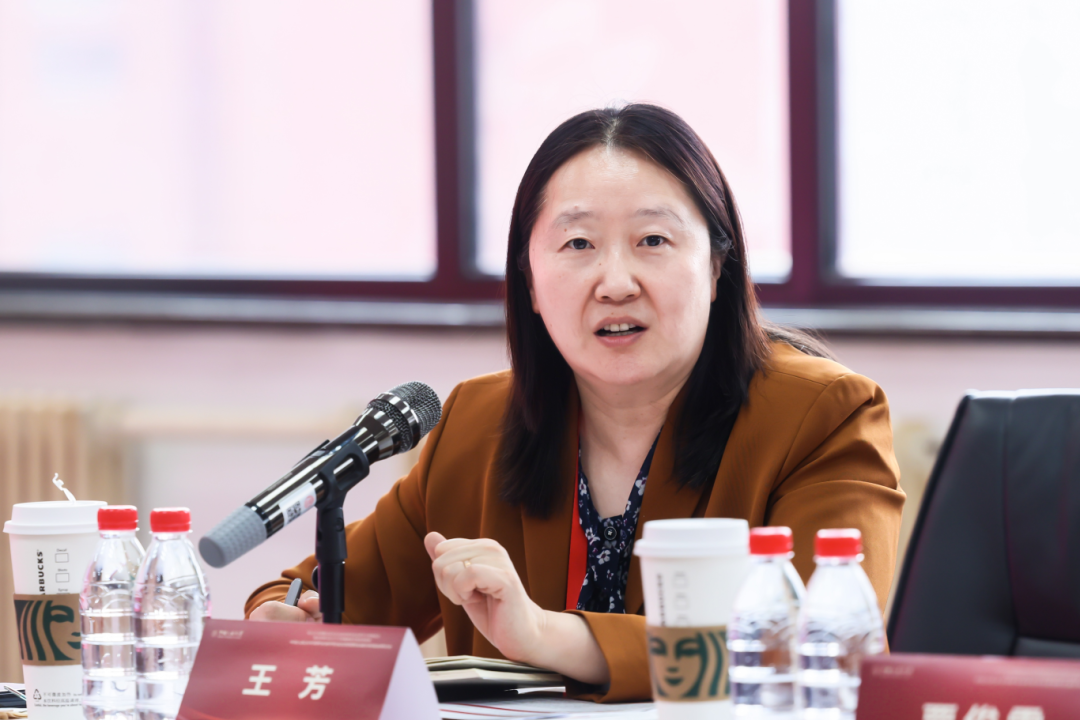
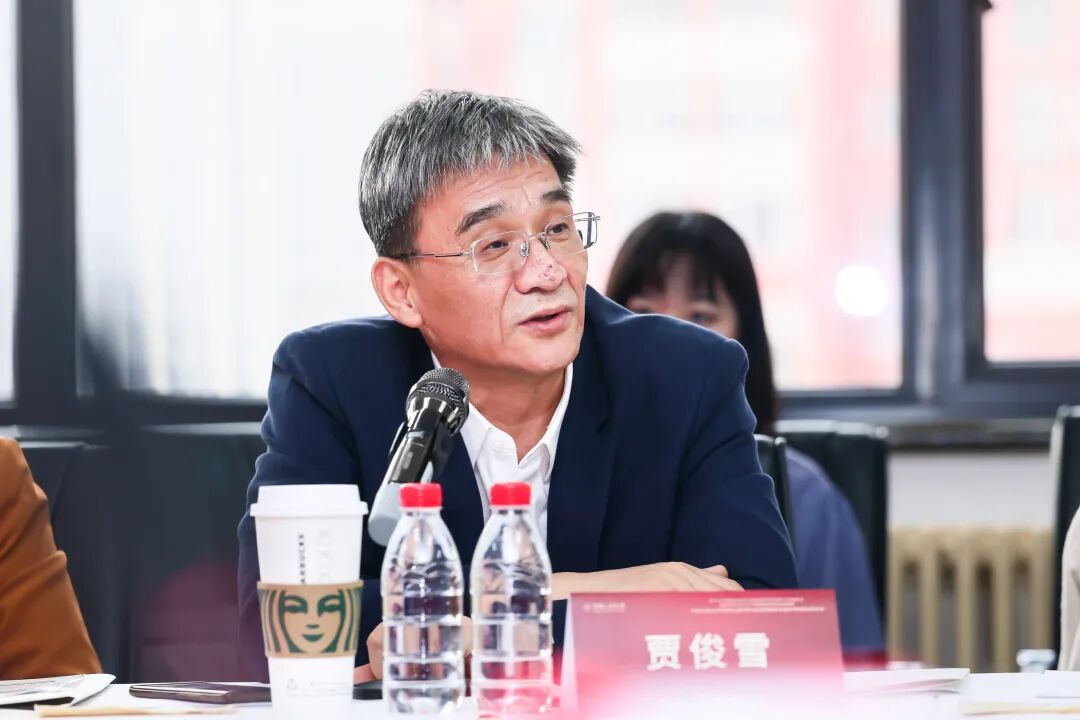
Jia Junxue and Zhuang Yumin delivered concluding remarks.
Jia Junxue stated that the establishment of the School of International Finance is centered on serving the cultivation of top innovative talent in international finance, while also playing a demonstrative and leading role in the overall reform of finance talent cultivation. The finance discipline is characterized by innovation, interdisciplinarity, and internationalization. It must respond to frontier issues in wealth creation and financial innovation while also adapting to the demands of the AI and digital eras for cross-disciplinary capabilities. With talent cultivation reform as the driving force, the School of International Finance should further integrate disciplinary, industry, and international resources, explore new mechanisms in curriculum systems, practical training, and research innovation, and provide new experience and support for the high-quality development of the finance discipline.
Zhuang Yumin stated that the School of International Finance undertakes the task of building a National Base for Training Outstanding Social Science Talent, with the core goal of exploring pathways for transforming the cultivation of humanities and social science talent in the new era. Facing the development of artificial intelligence and changes in the global financial governance landscape, the school should explore new mechanisms in interdisciplinary training, real-scenario practice, and collaborative education among government, industry, academia, and research.She noted that in the early stages, the school conducted systematic research on international finance talent cultivation and widely solicited opinions from regulatory authorities, financial institutions, international organizations, and alumni experts. In the future, the school will focus on the needs of building China into a financial powerhouse, promote theoretical innovation, practical innovation, and innovation in training models, and cultivate a high-level talent team capable of addressing complex challenges and participating in international financial competition.